CHAPTER XIV: A History of Jefferson County, Texas
Jefferson County and the Civil War: The Road to Gettysburg, 1861-1863
By W. T. Block
The outbreak of the American Civil War in the spring of 1861 had an immediate impact on Jefferson County’s commerce, which had reached its antebellum summit. The Texas and New Orleans railroad had been completed to Orange, and the Eastern Texas line was rapidly approaching Beaumont. By January, 1861, the locomotives and box cars for the lines were arriving at Sabine in addition to rails and crossties.1 The town’s population had reached about 1,500 persons, and four of Sabine’s firms, Eddy and Adams, Craig and Keith, C. H. Alexander, and John McRae, were shipping cotton at the rate of 20,000 bales annually.2 At least eleven steamboats,3 which in two weeks of February, 1861, brought 2,047 bales of cotton to the coast for trans-shipment, plied on the Sabine and Neches waters.4
According to the shipping statistics, the county’s economy had become increasingly geared to export. More than three hundred vessels cleared the Sabine customhouse in 1859.5 Between February 1-8, 1861, eleven schooners and steamers, three of which carried railroad iron, arrived to freight the county’s commerce abroad.6 Between March 21-27, a steamship, six steamboats, and six schooners docked at Sabine, and twenty vessels cleared the harbor for distant points.7
Despite the county’s vulnerability as an export center, a majority of its citizens supported the secession movement which spread throughout the lower South in the winter months of 1860-1861. The county’s delegates in the state convention, William and Thomas J. Chambers, were active secessionists, the latter serving as chairman of the committee which drafted the Texas secession ordinance.8 The ordinance, adopted by a 166-8 vote of the convention, was submitted to the voters of the state for their ratification in a popular referendum on February 23, 1861. In this election, the voters of Jefferson County endorsed the secession ordinance by a 256-16 vote.9 As a result of a statewide majority who favored separation, the state convention severed Texas’ ties to the Federal union and set up the machinery for the state’s defense. By March 6, 1861, sixty-eight men from Jefferson County had arrived at Galveston, where they enlisted for six months of duty in the Texas State Troops.10
When hostilities began at Fort Sumter, South Carolina, on April 12, 1861, many activities, including city government and newspaper publication, came to an abrupt halt in the county. There was wide-spread belief that only the first enlistees would see any active campaigning.11 Beaumont’s town council made its last entry in its minute book on April 9, as Mayor A. N. Vaughn and others prepared to enlist.12 A Beaumont youth, William A. Fletcher, hurried to complete a roof for fear of missing an opportunity. He joined Company F, Fifth Texas Infantry, of Hood’s Brigade at Lynchburg, Texas.13 Later, as his unit passed through Beaumont en route to Virginia, Vaughn, George W. O’Brien, and Jefferson Chaison enlisted.14
It was soon apparent that Jefferson County (and particularly, Sabine Pass) would bear the burden of its own defense. All available resources of the infant Confederate States government were needed to field armies in Virginia, the Mississippi River Valley, and at strategic points along the coastline. With business at a standstill, Sabine’s citizens established a Committee of Safety under David R. Wingate and K. D. Keith. On April 20, a 102-man militia company, named the “Sabine Pass Guard,” was organized under the Act of February 15, 1858.15 On May 4, 1861, Captain Joseph Hebert enlisted a 55-man cavalry company, the “Jefferson County Mounted Rangers,” at Beaumont.16 However, neither company entered active service in its original form.
Desiring guns and a fort with which to defend their city, Sabine’s Committee of Safety could locate only two wheeled, Mexican field pieces, which had been captured in 1847.17 In May 1861, the committee selected a site for Fort Sabine, one mile south of present-day Sabine Pass State Historical Park, and the town’s citizens and slaves began construction of its dirt and log fortifications.18 On May 17, 1861, the Jefferson County court ordered that $600 be disbursed to D. R. Wingate and John T. Johnson as its agents “for the purpose of purchasing and securing such arms and munitions of war ... for the garrisoning and defense of the fort at Sabine Pass.”19 Two months later, the county court appropriated an additional $1,400.20
On July 3, 1861, K. D. Keith and Samuel Adams rode to Galveston, where they obtained two 18-pound guns and twenty-five solid shot to be used at Fort Sabine. The town’s Committee of Safety bought all of the available gunpowder in the county, and Sabine’s women sewed flannel into cartridge bags to be filled with powder. Soon afterward, two 32-pound guns were obtained at Houston to complete the mud fort’s armor.21
In July and August, 1861, the three-month enlistments of the two militia companies expired. Most of the Sabine Pass Guard were reenlisted for one year into two units, an artillery company mustered by Captain James B. Likens, a Sabine Pass attorney,22 and a cavalry company, the “Ben McCulloch Coast Guard,” captained by Dr. James H. Blair.23 Later, Captain Likens visited General Paul O. Hebert’s headquarters at Galveston, where he obtained authorization to raise the Sixth Texas Infantry, a battalion of three companies. Blair’s unit (captained by O. M. Marsh after December, 1861) became Company A. After Likens’ promotion to battalion commandant, the artillery section, which became Company B, was commanded by Increase R. Burch for the remainder of the enlistment year, and thereafter, by K. D. Keith.24 Members of Joseph Hebert’s old company drifted away to join other units bound for the warfront.
For those who relished frontline action, garrison life at Sabine Pass was dull. Between September 14 and 21, 1861, the cavalrymen of Company A built barracks on the Front Ridge, about five miles west of the town. In October, they were armed with 120 carbines, acquired in Galveston. On one occasion in November, a three-masted Federal schooner ventured near enough to shell Company A’s beach pickets, but no other action occurred in 1861.25 The recruits of Company B were likewise bored and soon tired of close order drill. E. I. Kellie reported that “we drilled on the prairie about six months,” after which, “six of us under age, who wanted, to see a fight, packed our duds . .
went up to Jasper,” and joined Captain Norsworthy’s company.26
In December, 1861, George W. O’Brien returned to Beaumont, following his discharge due to impaired health. After his recovery, he enlisted and soon commanded, in March, 1862, a force of Beaumonters, who became infantry Company E of Likens’ Battalion. During the same month, the battalion of state militia was inducted into the Confederate army. A month later, Likens was authorized to raise a regiment and was soon replaced by Lieutenant Colonel Ashley W. Spaight, the former captain of Company F. By that date, the battalion included Captain W. B. Duncan’s Company F from Liberty County, Captain W. J. Spurlock’s Company D from Tyler County, and Captain W. C. Gibbs’ Company C of Newton County.27
During the ensuing months, the headquarters of Spaight’s Battalion was usually maintained at Beaumont or Sabine Pass, except for periods of field duty at Galveston, Houston, Niblett’s Bluff (opposite Ballew’s Ferry), or Central Louisiana. Because of its strategic position on the Texas and New Orleans Railroad, Beaumont gradually became a transportation and quartermaster depot, known as Beaumont Post, along the supply line between Houston and the Confederate armies in Louisiana.28 Until the late fall of 1862, the railroad operated all the way to Orange. Thereafter, the Orange County trackage was inoperative, and the Beaumont-Niblett’s Bluff connection was maintained by steamboat.29
In 1862, Jefferson County was still appropriating funds for its defense. During its May session, the county court levied a 10¢ per $100 valuation “county war tax” and appointed Captain John T. Johnson, the adjutant of Likens’ Battalion, to a committee to inspect and purchase firearms. On May 19, the court directed that drafts from the county’s war tax fund be issued “for all guns inspected and appraised by the committee appointed, for the use of Company E, Likens’ Battalion, Texas Volunteers, to the owners of the said guns for the appraised value thereof.”30 In November, 1862, the court requisitioned from and authorized payment to J. Y. Dashiell, adjutant and inspector general of Texas, for one hundred pounds of gunpowder “and the complement of lead and caps for the same.”31
During the first year of the war, both the Confederate authorities and the Union West Gulf Blockading Squadron tended to ignore the Sabine Pass. Except for a brief period in August, 1861,32 when a Union frigate anchored offshore, blockaderunners could expect to enter the Pass or escape it with relative ease. However, blockaders took up a permanent position there in July, 1862, and the risk of capture was greatly enhanced. The Federal blockader Hatteras arrived on July 8 and soon captured a number of small vessels, including the Sarah which had seventy-five barrels of molasses and 2,000 pounds of sugar aboard. The blockader’s master reported that Confederate sea captains at Havana had bragged that the Pass was not blockaded, and that he “had come to make the blockade effectual.”33
In August, 1862, the steamer Indian No. 2, loaded with forty-eight tons of Texas flour and bacon, was captured off Sabine, and soon afterward, the cotton-laden schooner William34 One month later, there were thirteen blockade-runners, eight steamers and five schooners loaded with 2,000 bales of cotton, docked in Jefferson and Orange counties, awaiting favorable conditions to escape the coast.35
Until January 21, 1863, after which only steam cruisers were used, Sabine’s blockaders were usually unwieldy sailing ships, such as the Morning Light, the 16-foot draft of which required that the vessel anchor five miles from the bar.36 Except when within gunnery range, such craft were no match for the county’s fleet, shallow-draft schooners, which sailed only in the dark of the moon, turned east or west to hug the coast, and escaped when the first opportunity arose. Augustine Pavell, whose schooner Sophia was based in the Sabine River delta, avoided capture throughout the war.37 Alexander Gilmer of Orange ran the blockade several times, but eventually, his schooner was captured off Sabine by the gunboat Hatteras. 38
The schooner Tampico, owned by Ruff Brothers of Beaumont and C. H. Alexander of Sabine, sailed on several voyages prior to its capture off Sabine in April, 1863.39 When Otto Ruff, who was one-third owner, died of yellow fever in October, 1862, his estate included $4,410 on hand from the Tampico’s previous voyages, $5,787 in cotton credits owed by the firm of Diomicio Camacho of Tampico, Mexico, and one-third of the cargo aboard the Tampico, which was then at sea.40
Occasionally, the county’s blockade-runners, either by accident or design to avoid capture, suffered defeat before clearing the Sabine Pass. Because of the treacherous mud flats at Texas and Louisiana Points, blockade-running at night was especially risky for anyone except the most experienced of pilots. In 1862, David R. Wingate purchased the steamer Pearl Plant and attempted to escape the Pass with a load of cotton. To avoid capture, Wingate ran his steamboat aground at Texas Point, after which he and his crew burned the vessel and waded ashore.41 In March, 1864, the Confederate States steamer Clifton, with 700 bales of cotton aboard, grounded in the same vicinity and suffered the same fate.42
In December, 1863, an incoming vessel, the schooner Rosalie, was trapped by a West Gulf blockader, and during a 24-hour chase, jettisoned 180 forty-pound kegs of gunpowder in an effort to outdistance its pursuer. The captain beached the Rosalie a few miles west of Sabine, and when the Union gunboat lowered a whaleboat, the skipper set his schooner ablaze.43
As early as October, 1861, a letter published at Houston sought to enlighten authorities concerning Jefferson County’s, and particularly Sabine’s, defenses, noting that “that point seems to be overlooked and the means of defense against invasion so poor and inadequate.”44 Nevertheless, it was July, 1862, before Colonel X. B. DeBray, the commandant of the Houston Sub-Military District, ordered a military inspection of the county’s defenses. He sent Major Julius Kellersberg to Sabine, where the latter reported the defenses to be “in a dilapidated condition,” the inadequate fort subject to two-foot overflows of tidewater, the guns, on “unwieldy truck carriages,” as being too small and without “fuses for shells, nor port-fires . . . gunner’s level, tangent scales, pass-boxes . . . etc.” Kellersberg added that the “pass at Sabine is certainly a very important point, and in fact, the only port from where we receive our powder and other articles.”45
Three months later, DeBray chided the Confederacy’s Trans-Mississippi Department headquarters for failing to act on his recommendation to improve Jefferson County’s defenses. DeBray added that Sabine “has proven to be our most important seaport,” and that a current disaster, a successful invasion by a Union naval squadron, could have been averted if adequate-size armaments had been provided.46 However, the colonel’s upbraiding was pointless. A concurrent disaster, an epidemic of yellow fever, had already caused about fifty deaths in the seaport and the evacuation of all but a handful of the town’s civilians and convalescent defenders.
About July 1, 1862, the British steamer Victoria, outbound from Havana carrying munitions, ran the blockade and docked at Sabine Pass.47 Although it was known that the vessel had sick crewmen aboard, it aroused no concern until a youth named Hartsfield, who had visited aboard the ship, became ill and soon died. Between July 15 and August 15, all five members of the Hartsfield family died, and the disease’s epidemic nature became apparent. Mrs. Sarah Vosburg, who had nursed the Hartsfield family and similar cases at New Orleans, quickly recognized the virulent symptoms of yellow fever, but the Sabine Post surgeon disagreed with her diagnosis.48
By September 1, the disease was decimating the ranks of the two military companies. As of that date, all but fourteen men of Company A, Spaight’s Battalion, and sixteen of Company B had contracted it.49 Six members of the former company had died,50 followed by several of Company B, including Lieutenants Goodnoe and Concannon, and Lieutenant R. J. Parsons of Sabine Post.51 Colonel Spaight, who was on court martial assignment in Houston, sent Dr. George Holland to investigate, and Dr. A. J. Hay, a yellow fever specialist, and a team of nurses to Sabine to attend the afflicted soldiers. Holland reported that, by September 1, twenty-five of sixty ill soldiers had died, and that the disease had reached Orange and Beaumont, where eight cases had been reported.52
Colonel Spaight immediately furloughed his battalion, and all personnel evacuated except convalescent patients and a few soldiers (former sailors), who had no home and chose to remain. The majority of civilians had fled two weeks earlier. Order No. 205 of the Houston Sub-Military District quarantined Sabine Pass, cutting off all communications and supplies from the interior. On September 15, a delegation of the town’s residents sent a protest of the quarantine to Colonel DeBray, noting that less than five days’ supplies were on hand and none could be expected until the epidemic subsided. On September 24, Houston citizens contributed $695 to purchase supplies and medicines for the stricken city.53
Since no list of casualties has been located, the number of epidemic victims in Jefferson County can only be estimated. A Union navy letter stated that “nearly one-half of the population” of Sabine City had died from the contagion, a grossly-exaggerated figure unless the writer was comparing only the residents who did not evacuate with the number of people who died.54 The epidemic was abating somewhat at Sabine by October 1, the period of greatest illness at Beaumont, where eight fatalities are known by name. There were still afflicted residents at Sabine, however, as late as October 20. During the last week of October, there were eight deaths of yellow fever at Beaumont.55
On September 24, 1862, at a time when Sabine’s defenders were unprepared to resist, three Federal vessels under Lieutenant Crocker appeared off the Sabine bar, and for the succeeding three months, the Union navy controlled Sabine Lake and its inlet. However, they generally avoided the town because of the rampant illness there. This period of history reveals the presence of some Jefferson County defectors and Northern sympathizers, and particularly, a Union spy and informant in Sabine Pass who remained unmolested throughout the war.56 Colonel DeBray suspected disloyalties among some Northern-born inhabitants of Sabine and warned them concerning communications with the enemy.57
The best-known defectors to the Union navy included L. W. Pennington of Sabine, who was believed to have surrendered his ship to the Federals at the outbreak of the war. Besides commanding the mortar schooner Henry Janes off Sabine in 1862, Pennington survived to accept the town’s surrender on May 25, 1865.58
James G. Taylor, a New York-born ship captain who settled in Jefferson County in 1839, was arrested by Confederate authorities at Sabine on September 29, 1862. However, he escaped to a Union vessel in the Sabine Pass and soon commanded the offshore gunboat Velocity, a captured blockade-runner. The Confederates placed a $10,000 bounty on Taylor’s head, whereas his wife and children remained in Sabine Pass throughout the war.59 Captain Henry C. Smith of Orange, whose steamboat T. J. Smith was confiscated by the Confederates, was another who lived a charmed life. He and Taylor piloted two ill-fated Union gunboats into Sabine Pass in September, 1863, as is subsequently related, but both men escaped capture.60 Other defectors included the John D. Kirkpatrick and Davis families of Sabine, who were granted asylum by the Union navy on October 2, 1862.61
In conjunction with his stab at south Jefferson County in 1862, Lieutenant Crocker’s squadron captured four British schooners, the Adventure, Dart, Velocity, and West Florida, offshore from Sabine. During two forays to Lake Charles, he burned three schooners in the Calcasieu River and captured the small steamboat Dan, which he fitted out as a gunboat in Sabine Lake.62 On September 24, the Union vessels crossed the bar and began shelling Fort Sabine.63 With less than twenty-five men from two companies fit for duty, the fort, under Major Josephus S. Irvine, returned the fire, but the range was too distant.64
At nightfall, Captain George W. O’Brien arrived from Beaumont with thirty men, all of whom were former convalescent soldiers at Camp Spindietop.65 Captains Keith and O’Brien proposed to remain, but Major Irvine ordered the guns spiked and buried, all stores removed, and the Confederate soldiers evacuated on the last train to leave Sabine Pass during the Civil War.66 On September 26, Crocker’s men came ashore, destroyed the fort and barracks, confiscated John Stamps’ and Wingate’s residences and the sawmill as Federal property, but offered the lumber to the populace as firewood. The following night, a raiding party burned the railroad bridge over Taylor’s Bayou, and subsequently, the railway depot, one mile north of Sabine City, on which occasion the Davis and Kirkpatrick families of Sabine were granted asylum by the Union navy.67
During the publication of the 158 volumes of The War of The Rebellion, one compiler inadvertently labelled one of Colonel Spaight’s letters (Armies, Series I, Vol. XV, 143-147) as the “burning of the railway bridge and depot” at Beaumont, and the error has been perpetuated by many subsequent historians. Actually, the Federals made no attempt, either by water or land, to advance any farther north than the bars of the Sabine and Neches rivers. This fact is borne out in Official Records, Navies, Series I, Vol. XIX. Lieutenant Crocker, in his numerous reports to his West Gulf Blockade superiors, always calculated the mileages, from the offshore Sabine bar to destination, travelled inland by his raiding parties.
Despairing of defending Sabine successfully, Colonel Spaight, upon his return from Houston, reassembled his battalion at “Cowpens,” near Smith’s Bluff (Nederland). He ordered his cavalry to reconnoiter the enemy’s movements and drive the cattle inland from the Pass to preclude their use by Crocker as a food supply. O’Brien’s company encamped near Taylor’s Bayou, while Keith’s Company B was sent to Grigsby’s Bluff with two guns to defend the Neches River. On October 2, the colonel sent an urgent appeal to Houston for guns and Major Kellersberg’s services to fortify the Sabine and Neches rivers.68
Kellersberg, the chief military engineer for East Texas, arrived at Beaumont the following day with men and equipment. He built Fort Grigsby, at present-day Port Neches, so that its two 24-pounder guns could sweep across a prominent bend in the Neches River. He constructed a fortification and installed three 32-pound guns on a shell bank near the Sabine River delta. As a further precaution against the Federals ascending the rivers, the engineer sank 80-foot barges loaded with clamshell on the bars of both the Sabine and Neches. By October 18, Kellersberg could report that the river defenses had been completed.69
Except for the shelling of Captain O’Brien’s company, encamped at Taylor’s Bayou, by the steamer Dan on October 15, hostilities in Sabine Lake were relatively quiet until the night of the 20th.70 Captain Keith at Grigsby’s Bluff learned that Crocker was buying meat and vegetables from Union sympathizers at Johnson’s Bayou, Louisiana, and sent one of his men to spy on their movements. Keith was warned that Crocker’s staff of officers planned to attend an all-night dance there. Keith took twenty men of Company B in an effort to trap them, but the Union officers managed to escape.71
On October 20, Lieutenant R. E. Bolton led thirty of Company A’s cavalrymen to the Sabine Pass, where they remained concealed on the bank near the sawmill. When the steamer Dan approached, towing the Velocity, the Confederates fired four carbine volleys at the crowded decks of the vessels. The cavalry retreated inland when the Dan’s artillerists fired cannister shot at them. In retaliation, the Dan shelled Sabine City. A patrol came ashore and burned Stamps’ and Wingate’s spacious dwellings, the sawmill and planing mill, and about 700,000 feet of rough lumber stacked nearby, a loss estimated by Sergeant H. N. Conner of Company A at $150,000.72
Determined to rid themselves of the vexatious cavalrymen, fifty of Crocker’s men came ashore on October 17 with a “light boat howitzer.” They marched through Sabine City twice en route to and from the cavalry barracks west of the town, where they burned fourteen barracks and stables and drove the Confederate troopers away with their cannon.73 While advancing through the town, the Bluejackets took Captain John Dorman’s horse and cart, upon which they mounted the cannon. One account of the confrontation stated that:
. . . Mrs. Dorman, who witnessed the act, became perfectly enraged, and being one of the bravest women in the Confederacy, gave them just such a tongue-lashing as only a brave woman would dare do. She shook her fist at them and told them she hoped our boys would kill the last one of them before they got back, and if she had twenty-five men, she could take them and their cannon with them . . . After the enemy retired to their gunboat, they gave Dorman his horse and cart again, and told him if he did not keep his d—-d wife’s mouth shut, they would hang him . . . Mr. and Mrs. Dorman have a large [the Catfish] hotel in the place, and the Yanks declare that if she does not apologize for what she said to them . . . they will burn it. She declares that she will see them in the lower regions first, and they may burn it if they choose . .,74
After the events of October, 1862, Spaight’s cavalry and Company E were based at “Cowpens,” near Smith’s Bluff, and at Camp Spindietop, south of Beaumont.75 Company B remained at Fort Grigsby, while the remaining infantrymen guarded the railroad bridge at Beaumont and the railroad, port, and the Confederate government-owned cotton at Orange.76 The succeeding two months were relatively quiet except for cavalry scouting at Sabine. It was less so at Galveston, where Union Commander Renshaw’s squadron occupied the island and bay in October.77
On November 29, Major General John B. Magruder arrived at Houston to command the District of Texas, New Mexico, and Arizona.78 The aggressive commander wasted no time in driving the Federals from Galveston Bay and Island on New Year’s Day.79 The change of command decidedly altered the Confederacy’s attitude toward Jefferson County, the plans of which included the breaking of the blockade at Sabine Pass and the building of a fort capable of defending the seaport city.
On December 5, 1862, Quincy A. Hooper, the commander of Sabine’s Federal forces, was notified by his Sabine City informant that General Magruder planned to lift the blockade with two armed, cotton-clad steamboats. The following day, Hooper moved the leaking Rachel Seaman across the bar and anchored offshore, leaving only the steamboat Dan to guard the inner Pass.80 However, another assailant, Company A’s unforgiving cavalrymen, were also stalking the little sternwheeler. After two unsuccessful attempts, Sergeant H. N. Conner and nine of his troopers rowed up to the Dan in a dense fog on January 8, 1863, and swiftly applied the torch to the vessel. Within two hours, the steamer, which was anchored near the lighthouse, had burned to the waterline.81
On January 10, 1863, Captain Keith’s company was ordered from Fort Grigsby to Orange,82 where the steamers Josiah Bell and Uncle Ben were being outfitted as cottonclad gunboats. Major O. M. Watkins had been transferred from Houston to command the expedition to break the blockade, whereas the navigation of the vessels was assigned to Captain Charles Fowler, chief of Confederate marine operations in Sabine Lake. Company B’s artillerists were detailed to man the two 12-pound guns on the Uncle Ben and a single 64-pound rifled cannon on the Josiah Bell was assigned to Captain F. H. Odium’s Company F of the First Texas Heavy Artillery. Captain O’Brien’s Company E came aboard to serve as sharpshooters on the Uncle Ben, and smaller groups from Spaight’s Battalion and Pyron’s Regiment accompanied the artillerists on the Bell.83
Early on January 21, the plucky gunboats steamed out of the Sabine Pass to engage the blockaders Morning Light and Velocity, armed with twelve guns, nine of which were of 32-pound size. Fortune favored the cottonclads, for the waters were calm and the breeze was insufficient to fill the blockaders’ sails. Nevertheless, a thirty-mile chase ensued before the slow steamers came within gun range. As the distance narrowed to two and one-half miles, four shells from the Bell struck the Morning Light and exploded, and later, both Union vessels surrendered when the sharpshooters’ musketry forced the gun crews from the decks.84
Prize crews brought the captured ships to Sabine, but the 900-ton Morning Light, because of its size and draft, was anchored offshore on the orders of Major Watkins, who had remained intoxicated throughout the affray.85 Both Keith, an experienced pilot, and Captain Peter Stockholm, the senior bar pilot, pleaded that the prize ship, with the aid of the steamers, could be kedged through the soft mud of the Sabine bar, but Major Watkins, using “language unfit to write,” denied them the opportunity to try. Captains Keith and Odium asked permission to place artillerymen, who could defend the vessel, aboard the Morning Light, but Watkins refused, allowing only cavalrymen to remain on the ship.86
Other than nine guns at stake, the large ship carried a very extensive magazine of gunpowder and shells and four hundred tons of badly-needed pig iron as ballast. Although the Confederates managed to lighten some of the gunpowder and shells aboard the Uncle Ben, the Morning Light had to be burned when the Federal gunboats Cayuga and New London hove in sight the following day.87
As the Civil War in the Sabine Pass evolved into a series of reprisals and counter-reprisals, the new blockade chief, Commander Abner Read of the New London, was to prove as aggressive as his counterpart, Lieutenant Frederick Crocker. Read’s lookouts could see the gunboats Bell and Uncle Ben floating serenely at anchor in the safety of the Pass, the cottonclads’ prows figuratively smirking as a result of their recent triumph. In March, 1863, Read’s spy in the abandoned lighthouse could detect a veritable beehive of construction activity at a new fortification site farther inland.88
By 1863, Jefferson County’s inhabitants no longer believed that the Civil War would end rapidly. They had long since grown accustomed to the war’s exhausting duration, its lengthy casualty lists, and its tribulations and privations. And although the county’s citizens were elated with the results of the offshore battle and the recapture of Galveston, there was likewise a stark realization that, eventually, it would be upon the fields of Virginia, not the waters of the Sabine Pass, that the conflict’s outcome would be decided.
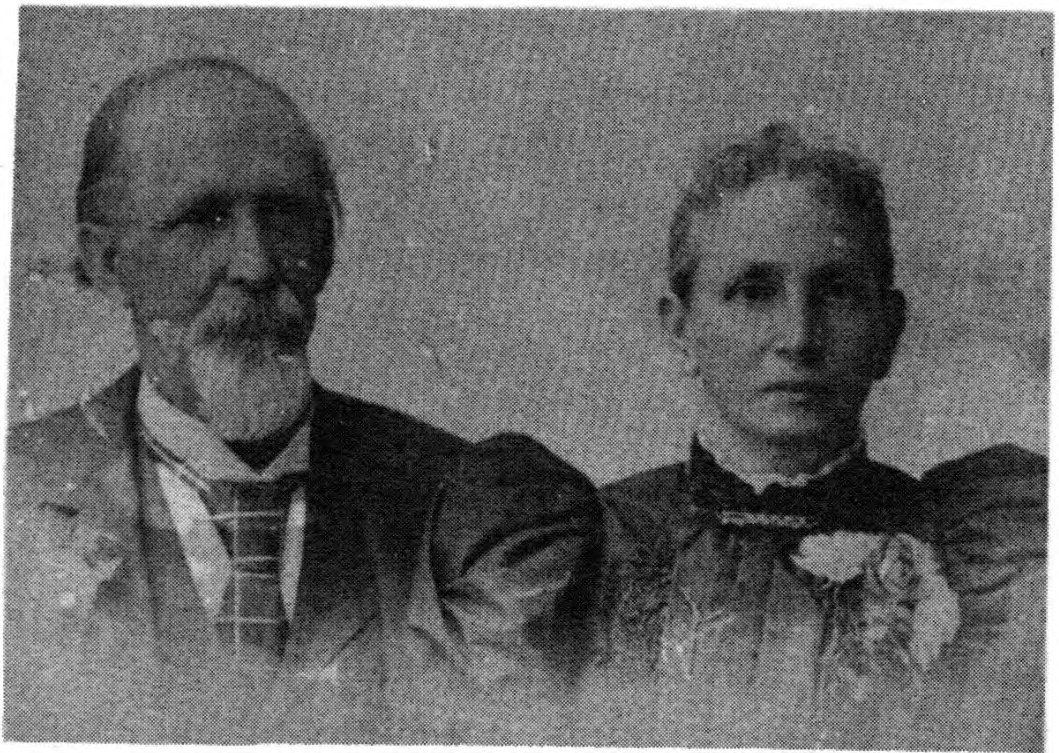 K. D. and MARY JANE KEITH—K. D. Keith, a Sabine cotton broker, settled at Sabine in 1857, where he married a daughter of Otis McGaffey. He commanded Co. B, Spaight’s Battalion, during the Civil War.
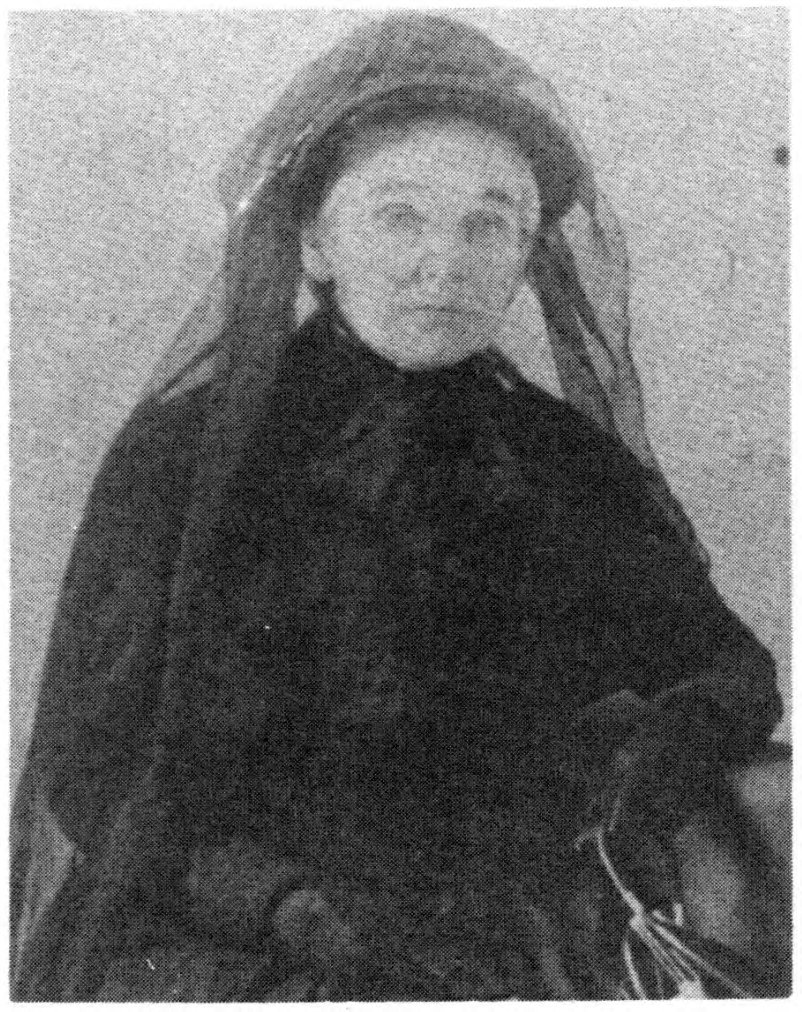 CATHERINE A. DORMAN—What Sabine’s diminutive (4’ 10”) innkeeper, Kate Dorman, lacked in stature, she compensated for in sheer guts and bravery. She faced 50 Federal Bluejackets alone and ‘tongue-lashed’ them for taking her horse and cart.
Endnotes
1 (Galveston) Weekly News, January 12, 1861, and Tri-Weekly News, April 4, 1861. In January, 1861, two locomotives and several freight cars arrived for the Texas and New Orleans Railroad. In March, the schooner Whirlwind brought two passenger cars and ten box cars for the same line, and railroad iron and other materials for the Eastern Texas Railroad.
2 E. I. Kellie, “Sabine Pass in Olden Times,” Beaumont Enterprise, April 16, 1905.
3 “The steamers T. J. Smith, Doctor Massie, Mary Falvey, and Sunflower were engaged in the Neches River trade. The Uncle Ben, Roebuck, Grand Bay, Pearl Plant, and Sabine plied the Sabine River. The Florilda and Josiah Bell belonged to the railroads.
4 (Galveston) Weekly News, March 5, 1861.
5 Texas Almanac, 1861 (Galveston: Richardson and Company, 1862), p. 237.
6 (Galveston) Weekly News, February 19, 1861.
7 (Galveston) Tri-Weekly News, April 4, 1861.
8 Ralph A. Wooster, The Secession Conventions of The South (Princeton: 1962), p. 130.
9 (Galveston) Weekly News, March 5, 1861; E. W. Winkler (ed.), Journal of The Secession Convention of Texas, 1861 (Austin: Austin Printing Company, 1912), p.
10 Winkler (ed.), Journal of The Secession Convention of Texas, pp. 91, 394.
11 William A. Fletcher, Rebel Private Front and Rear (reprint; Austin: University of Texas Press, 1954), p. 6.
12 Record of The Board of Aidermen of Beaumont, 1860-1861, in the county archives, Jefferson County, Texas.
13 Fletcher, Rebel Private, pp. 6-8.
14 Ibid., p. 7; Beaumont Journal, June 17, 1906; Cooper K. Ragan (ed.), The Diary of Captain George W. O’Brien, p. 5, as reprinted from Southwestern Historical Quarterly, LXVIII (1963), Nos. 1, 2, and 3.
15 K. D. Keith, “The Memoirs of Captain K. D. Keith,” 27-page unpublished manuscript, 1896, p. 16; Muster Roll, Sabine Pass Guard, April 20, 1861, Texas State Archives, copy owned by the writer. Z. Williams Eddy, a Sabine cotton broker, commanded the company.
16 Muster Roll, Jefferson County Mounted Rangers, Beaumont, May 3, 1861, Texas State Archives, and recorded in Volume C, pp. 51-52, Personal Property Record, Jefferson County, Texas.
17 K. D. Keith, “Military Operations, Sabine Pass, 1861-1863,” in Burke’s Texas Almanac and Immigrants’ Handbook for 1883 (Houston: J. Burke, Publisher, N. D.), pp. 65-69.
18 Keith, “Memoirs of Captain K. D. Keith,” p. 16.
19 Volume C, p. 72, Commissioners* Court Minutes, Jefferson County, Texas.
20 Ibid., pp. 72-73.
21 Keith, “Memoirs of Captain K. D. Keith,” pp. 16-17; Keith, “Military Operations, Sabine Pass,” Burke’s Texas Almanac, pp. 65-66.
22 Volume C, pp. 59-60, Personal Property Record, Jefferson County, Texas; Muster Roll, Sabine Pass Guard, July, 1861, J-B. Likens, commanding officer, Texas State Archives.
23 Volume C, pp. 62-63, Personal Property Record, Jefferson County, Texas.
24 Keith, “Memoirs of Captain K. D. Keith,” unpublished manuscript, 1896, p. 17; H. N. Conner, “The Diary of H. N. Connor,” unpublished manuscript, p. 1, copy owned by Dr. Haskell Monroe, Texas A and M University; Ragan (ed.), Diary of Captain George W. O’Brien, p. 6; “History of Spaight’s Texas Regiment," A. W. Spaight Papers, University of Texas library.
25 Connor, “Diary of H. N. Connor,” p. 1.
26 E. I. Kellie, “Founder of Newsboy Writes Self-Portrait,” (Jasper, Texas) Newsboy, January 12, 1923; E. I. Kellie, “Sabine Pass in Olden Times,” Beaumont Enterprise, April 16, 1905.
27 Ragan (ed.), Diary of Captain George W. O’Brien, pp. 5-6; “History of Spaight’s Texas Regiment,” A. W. Spaight Papers, File 2G276, University of Texas at Austin; M. Wright and H. B. Simpson, Texans In The War 1861-1865 (Hillsboro, Texas: H. J. C. Press, 1965), pp. 108-109.
28 War of The Rebellion: A Computation of The Official Records of The Union and Confederate Armies (Washington, D. C.: Government Printing Office, 1880-1901), Series I, Volume XV, pp. 143-147; Volume XXVI, Part 2, pp. 73, 208, 376, 391; and Volume XXXIV, Part 3, pp. 800, 812-813; Connor, “Diary of H. N. Connor,” p. 7.
29 Whether or not trains ever operated in Orange County during the Civil War has been a subject of dispute. S. G. Reed, the Texas railroad historian, doubted it, recording that “there are reasons to doubt whether the road ever operated all the way to Orange before or during the war; it most certainly was not operated beyond Beaumont after 1863 . . .” See S. G. Reed, A History of The Texas Railroads (Houston: St. Clair Publishing Company, 1941), pp. 85-86. However, evidence to the contrary is too extensive. The July-October, 1862, issues of the Galveston Weekly News consistently refer to the arrival at Houston of “the Orange train.” Its issue of August 6, 1862, noted that the “cars are now making regular trips from here to Orange and back every day.” In the September 3, 1862, issue of Galveston Tri-Weekly News, the railroad advertised westbound service, utilizing the steamer Florilda, which left “Niblett’s Bluff on Tuesday, Thursdays, and Saturdays, at 3:00 A. M., and arrive at Orange in time to take the cars for Houston at 6:30 A. M.” In August, 1863, Major Leon Smith reported that 150 slaves could repair the damaged trackage in the swamps “east of the Beaumont bridge to Orange** in one week. See Official Records, Armies,Series I, Volume XXVI, Part 2, pp. 209-210.
30 Volume C, p. 96, Commissioners’ Court Minutes, Jefferson County, Texas.
31 Volume C. pp. 107-108, Commissioners’ Court Minutes, Jefferson County, Texas.
32 (Galveston) Weekly News, August 20, 1861.
33 (Galveston) Tri-Weekly News, July 15, 1862.
34 ( Galveston) Weekly News, August 13 and September 3, 1862.
35 A Compilation of The Official Records of The Union and Confederate Navies in The War of The Rebellion (Washington, D. C.: Government Printing Office, 1894-1927), Series I, Volume XIX, pp. 225-229. Lieutenant Frederick Crocker wrote that “the importance of Sabine Pass to the rebels appears to have been entirely underrated by us.’’ See p. 225.
36 Official Records, Navies, Series I, Volume XIX, p. 556.
37 (Galveston) Civilian and Galveston Gazette, November 23, 1865; Will and Testament, Estate of Augustine Pavell, 1867, Volume 162, p. 378, Deed Records, Galveston County, Texas.
38 John H. Brown, Indian Wars and Pioneers of Texas (Austin: L. E. Daniel, 189?), p. 195.
39 Official Records, Navies, Series I, Volume XX, p. 112. When captured, the Tampico had 112 bales of cotton aboard.
40 File 195, Estate of Otto Ruff, 1862, Probate Records, Jefferson County, Texas.
41 Thomas A. Wilson, Some Early Southeast Texas Families (Houston: Lone Star Press, 1965), p. 13.
42 Official Records, Navies, Series I, Volume XXI, pp. 160-161. A part of the, Clifton’s superstructure remained visible until the hurricane of June, 1957.
43 (Houston) Tri-Weekly Telegraph, December 25, 1863; (Galveston) Tri-Weekly News, December 27, 1863.
44 (Houston) Tri-Weekly Telegraph, November 1, 1861.
45 Official Records, Armies, Series I, Volume IX, p. 729.
46 Official Records, Armies, Series I, Volume XV, p.
47 K. D. Keith, “Military Operations, Sabine Pass, 1861-1863,” Burke's Texas Almanac and Immigrants Handbook For 1883, pp. 65-66.
48 Dr. George Holland, “Epidemic at Sabine Pass,” (Houston) Tri-Weekly Telegraph, September 10, 1862; Keith, “Memoirs of Captain K. D. Keith,” unpublished manuscript, p. 19.
49 (Houston) Tri-Weekly Telegraph, September 10, 17, 1862: (Galveston) Tri-Weekly News, September 12, 1862.
50 Record of Casualties of Company A, Spaight’s Battalion, in H. N. Connor, “Diary of H. N. Connor,” unpublished manuscript.
51 G. W. McGaffey, Genealogical History of the McGaffey Family (Bradford, Vermont: Opinion Press, 1904), p. 31; Keith, “Memoirs of Captain K. D. Keith,” pp. 19-21.
52 Letter, Holland to Spaight, Houston, September 8, 1862, in (Houston) Tri-Weekly Telegraph, September 10, 1862. Despite their own infirm circumstances, soldiers had to nurse the civilians, and sufficient labor to dig graves could not be obtained. Keith stated that “our principal business was to bury the dead.” See Keith, “Memoirs,” p. 20 and Connor, “Diary,” p. 2.
53 Keith, “Memoirs of Captain K. D. Keith,” p. 19; (Houston) Tri-Weekly Telegraph, September 24, 1862; Official Records, Armies, Series I, Volume XV, pp. 143-147; W. T. Block, “Sabine Pass in The Civil War,” East Texas Historical Journal, IX (October, 1971), p. 131.
54 Letter, Pennington to Renshaw, September 29, 1862, in Official Records, Nauies, Series I, Volume XIX, p. 223. The presence of L. W. Pennington, master of the mortar schooner Henry Janes, was especially repugnant since he had been a highly-respected ship captain before the war.
55 (Houston) Tri-Weekly Telegraph, October 27, 1862: (Galveston) Tri-Weekly News, November 11, 1862. Keith lost a sister-in-law, a brother-in-law, and his wife’s grandmother to yellow fever. Other fatalities included Julia Sweet Burgett, Mrs. N. F. Smith, Nancy Millard, Elvina Stewart, and the mayor of Sabine (name unknown) who died on September 22.
56 Official Records, Navies, Series I, Volume XIX, p. 392. A century in retrospect, the writer will avoid use of the word “traitor,” for Texas had thousands of German and Northern-born immigrants of pronounced Union sympathies. Such persons, however, were regarded as traitors by their Southern contemporaries. Only the surname of the spy is known.
57 Official Records, Armies, Series I, Volume XV, pp. 816-817.
58 Official Records, Navies, Series I, Volumes XIX, pp. 221-224, and XXII, pp. 211-213; Official Records, Armies Series I, Volume XV, pp. 816-817.
59 Official Records, Navies, Series I, Volume XIX, pp. 229-230. After three hairbreadth escapes from the Confederates, the last on September 8, 1863, to the Federal gunboat Arizona, the well-documented account of Taylor ended. According to his probate record, he died under unknown circumstances in 1864, while his son was serving in the Confederate army. See Estate of James G. Taylor, Probate Record, Jefferson County, Texas.
60 Official Records, Armies, Series I, Volume XXVI, Part 2, p. 337. Braving the enmity of his neighbors, Henry Clay Smith was a Taylor’s Bayou farmer in 1870.
61 (Houston) Tri-Weekly Telegraph, October 5, 1862; Official Records, Navies, Series I, Volume XIX, pp. 220, 225.
62 Official Records, Navies, Series I, Volume XIX, pp. 218-225.
63 Ibid., pp. 219-220, 232-234; (Galveston) Tri-Weekly News, September 26, 1862; (Houston) Tri-Weekly Telegraph, September 29, 1862.
64 Keith, “Memoirs of Captain K. D. Keith,” p. 20; Conner, “Diary of H. N. Connor,” p. 2; (Galveston) Weekly News, October 1, 1862; (Houston) Tri-Weekly Telegraph, October 6, 1862.
65 Keith, “Memoirs of Captain K. D. Keith,” p. 20.
66 Official Records, Navies, Series I, Volume XIX, pp. 223, 232; H. N. Connor, “The War at Sabine Pass,” (Houston) Telegraph Supplement, October 3, 1862; Official Records, Armies, Series 1, Volume XV, pp. 143-47.
67 (Houston) Tri-Weekly Telegraph, October 22, 1862; “Sabine Pass,” (Galveston) Tri-Weekly News, November 11, 1862; Official Records, Navies, Series I, Volume XIX, pp. 223-224. One account noted that Crocker “told the citizens to use the sawed lumber for firewood ... as it now belonged to the U. S. Government. ” See Tri-Weekly Telegraph, November 5, 1862.
68 Official Records, Armies, Series I, Volume XV, pp. 143-147; Keith, “Memoirs,” p. 21; Connor, “Diary,” p. 4.
69 Official Records, Armies, Series I, Volume XV, pp. 852-853, 150; Alwyn Barr, “Texas Coastal Defense, 1861-1865,” Southwestern Historical Quarterly, XLV (July, 1961), pp. 12-13.
70 Ibid.; Official Records, Navies, Series I, Volume XIX, p. 228; (Houston) Tri-Weekly Telegraph, October 17 and November 5, 1862.
71 Keith, “Memoirs of Captain K. D. Keith,” p. 21. Although unpublished at this writing, Keith’s memoirswill appear in the November, 1974, issue of Texas Gulf Historical and Biographical Record.
72 Conner, “Diary of H. N. Connor,” p. 4; “Night Attack at Sabine Pass,” (Houston) Tri-Weekly Telegraph, November 5, 1862.
73 Letter, F. Crocker to D. G. Farragut, October 24, 1862, in Official Records, Navies, Series I, Volume XIX, p.
74 Letter, J. H. to E. H. Cushing, Beaumont, October 31, 1862, in (Houston) Tri-Weekly Telegraph, November 5, 1862. A year later, Sarah Vosburg and Kate Dorman would show their grit again during the Battle of Sabine Pass. See Chapter XV and the latter’s photograph in Civil War Times Illustrated, XII (December, 1973), p. 36. After losing their barracks, Company A’s cavalrymen contributed $500 from their personal funds and purchased a 6-pound cannon, nicknamed “Aunt Jane,” in Houston. See Connor, “Diary,’ p. 5.
75 Connor, “Diary of H. N. Connor,” p. 5.
76 Official Records, Navies, Series I, Volume XIX, p.
77 Official Records, Armies, Series I, Volume XV, p.
78 (Houston) Tri-Weekly Telegraph, December 5, 1862.
79 (Houston) Galveston Weekly News, January 7, 1863; Official Records, Armies, Series I, Volume XV, pp. 214-220.
80 Official Records, Navies, Series I, Volume XIX, pp. 392-395; (Houston) Tri-Weekly Telegraph, December 29, 1862.
81 Connor, “Diary of H. N. Connor,” p. 5-a.
82 Keith, “Memoirs,” p. 21.
83 Keith, “Military Operations, Sabine Pass,” pp. 66-67; Connor, “Diary of H. N. Connor,” pp. 5-6; Official Records, Navies, Series I, Volume XIX, pp. 564-565; J. T. Scharf, A History of The Confederate States Navy (Albany: Joseph McDough, 1894), p. 516; (Galveston) Weekly News, January 28, 1863; W. Wiess, “Captain Wiess Tells of Forty-Eight Years Ago,” Beaumont Enterprise, January 21, 1912.
84 Official Records, Navies, Series I, Volume XIX, pp. 565, 571; (Galveston) Weekly News, January 4, 1867.
85 Keith, “Memoirs of Captain K. D. Keith,” pp. 22-25; Connor, “Diary of H. N. Connor,” p. 6; Beaumont Enterprise, January 21, 1912.
86 Captains Keith, Odium, and Stockholm concluded that if “General Magruder were so foolish as to send such a thing as that to command, the whole thing could go.” See Keith, “Memoirs,” p. 25.
87 Official Records, Navies, Series I, Volume XIX, pp. 556, 566, 570.
88 Official Records, Navies, Series I, Volume XX, p. 128.